


 English
 Français
 Deutsch
 Italiano
 Português
 Русский
 Español
 简体中文
简体中文 日本語
日本語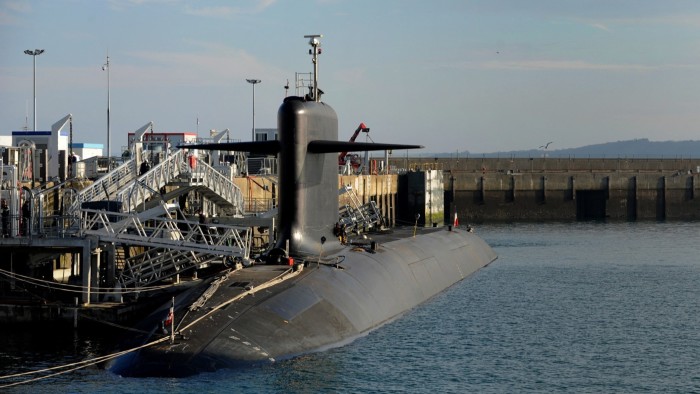

Unlock the Editor’s Digest for free
Roula Khalaf, Editor of the FT, selects her favourite stories in this weekly newsletter.
The French army intercepted five drones spotted flying over a nuclear submarine base on its north Atlantic coast as Europe remains on high alert for foreign interference at sensitive sites.
Defence minister Catherine Vautrin confirmed the incident on the Île Longue peninsula in Brittany on Friday, saying “all flyover of military bases is prohibited in our country”.
The origin of the drones, which were intercepted on Thursday evening, was not known, she added.
Separately, Irish police have launched a probe into a drone incursion that reportedly narrowly missed Ukrainian President Volodymyr Zelenskyy’s plane as he arrived in Dublin on Monday for a state visit.
Ireland’s government and defence forces have not commented but Irish police said its special detective unit was investigating and would liaise with international partners.
The incursion, confirmed by one person with knowledge of the incident, involved suspected military-grade drones, and was first reported by The Journal news site.
French public prosecutor Frédéric Teillet late on Friday said “no link to any foreign interference has been established” regarding the nuclear base incident, and clarified the drones had not been shot at with firearms but that the army had fired off jammers.
The defence ministry said military personnel on the base had a “rapid and suitable reaction following the procedures in place”.
The peninsula off Finistère in northern France is a heavily protected area where the country keeps several of its nuclear submarines, part of the nation’s nuclear dissuasion arsenal.
France has been prone to incidents in recent years, including sabotage of rail lines and stunts such as coffins filled with cement left by the Eiffel Tower, which have prompted investigations into whether the people carrying out the acts were in some way linked to Russia.
Few of the cases have shown that definitively. But France, like Germany and other EU nations involved in supporting Ukraine following Russia’s full-scale invasion in 2022, has described a state of “hybrid confrontation” with Moscow, with disinformation campaigns and suspected cyber attacks.
Ireland, which spends the least on defence among EU nations, has no radar or sonar, has not developed a security clearance system or above-secret communication mechanisms, and only has limited ability to tackle drones, even though it will host the EU’s rotating presidency in the second half of next year.
“If there is a malicious actor out there who’s trying to show off Irish weaknesses and vulnerabilities, they have succeeded,” said Edward Burke, an assistant professor of the history of war at University College Dublin.
“The very confused response and deep concerns about capabilities have shown vulnerabilities. So unfortunately, this incident, whether it’s verified or not, has raised very, very serious questions.”
Drone flights over sensitive infrastructure have become a recurring source of alarm across the region. In Denmark, drones were spotted in September flying over several airports including military ones, and authorities said they did not rule out Russian involvement.
Read the full article here