

 English
 Français
 Deutsch
 Italiano
 Português
 Русский
 Español
 简体中文
简体中文 日本語
日本語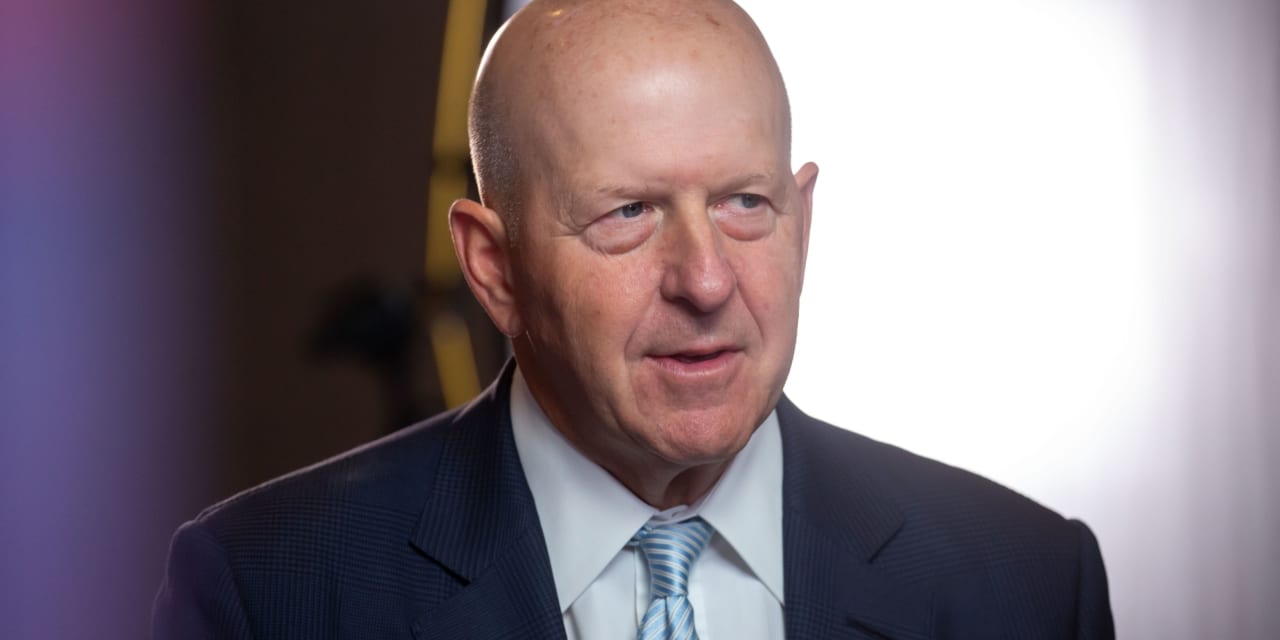

When
Arm
makes its public debut Thursday, attention won’t be on the U.K.-based chip maker alone. The deal’s lead underwriter,
Goldman Sachs,
will also be in the spotlight.
A successful initial public offering for Arm could reinvigorate what has been a lackluster IPO market, translating to more business for Goldman (ticker: GS) and its investment banking peers. A misstep, however—whether due to market conditions or Goldman’s efforts—will continue the chill on public debuts and could be another blemish for embattled Goldman chief David Solomon.
Arm is looking to raise roughly $5 billion at a $54.5 billion valuation, the largest tech IPO since the debut of
Uber Technologies
(UBER) in 2019. Outside of Arm, delivery company
Instacart,
sandal maker
Birkenstock,
and marketing platform
Klaviyo
are expected to make public debuts, all with Goldman as lead underwriter.
Success for these companies will be measured by smooth execution at the opening trade and stock prices that remain above IPO prices in the weeks after debuts. Accomplishing that would be a feather in the caps of Goldman and Solomon, allowing the bank to show its prowess in taking companies public after money-losing missteps in trying to build out a consumer finance business.
A slow IPO market isn’t the fault of Goldman. Rapidly rising interest rates and geopolitical concerns can be blamed for that. But the slowdown came at a bad time as the bank has had to contend with reports of discontent among its partners and questions about Solomon’s leadership. While that hasn’t affected the bank’s standing in IPO league tables, the bank is in need of a win to quiet naysayers.
“There is certainly a spotlight on these IPOs,” Gerard Cassidy, analyst at RBC Capital Markets, told Barron’s. “We want to see these priced right. If they fall below the syndicate price, that will sour the pipeline.”
Goldman declined to comment.
Solomon appeared aware of the stakes when speaking about Arm and other IPOs in its pipeline at a Barclay’s conference this week.
“It has been quite a while since I could say to you we have a handful of very significant IPOs in the market. That’s an improvement,” Solomon said. “I do believe that if these go well and it feels at the moment like they’re progressing nicely, it kind of creates a virtuous cycle of bringing more of the pent-up backlog to market.”
Put simply, that backlog means more revenue. Goldman’s equity underwriting revenue is up 41% through the first half of 2023 but that increase is off a low base. Between 2021 and 2022, equity underwriting revenue fell 83% to $848 million.
There have been 72 IPOs so far this year, outpacing the 71 debuts for all of 2022 but well below the 397 debuts in 2021 when markets were white hot, according to data from Renaissance Capital. In the five years between 2016 and 2020, the number of IPOs averaged 168. Accordingly, the
Renaissance IPO exchange-traded fund
(IPO) has climbed 35% this year but is down 51% over the past two years as investors have soured on new issuances.
“If investors make money on Arm, they are certainly more likely to put money in the next deal,” Matt Kennedy, senior IPO market strategist at Renaissance Capital, said.
And that means more money for Goldman.
Write to Carleton English at [email protected]
Read the full article here