

 English
 Français
 Deutsch
 Italiano
 Português
 Русский
 Español
 简体中文
简体中文 日本語
日本語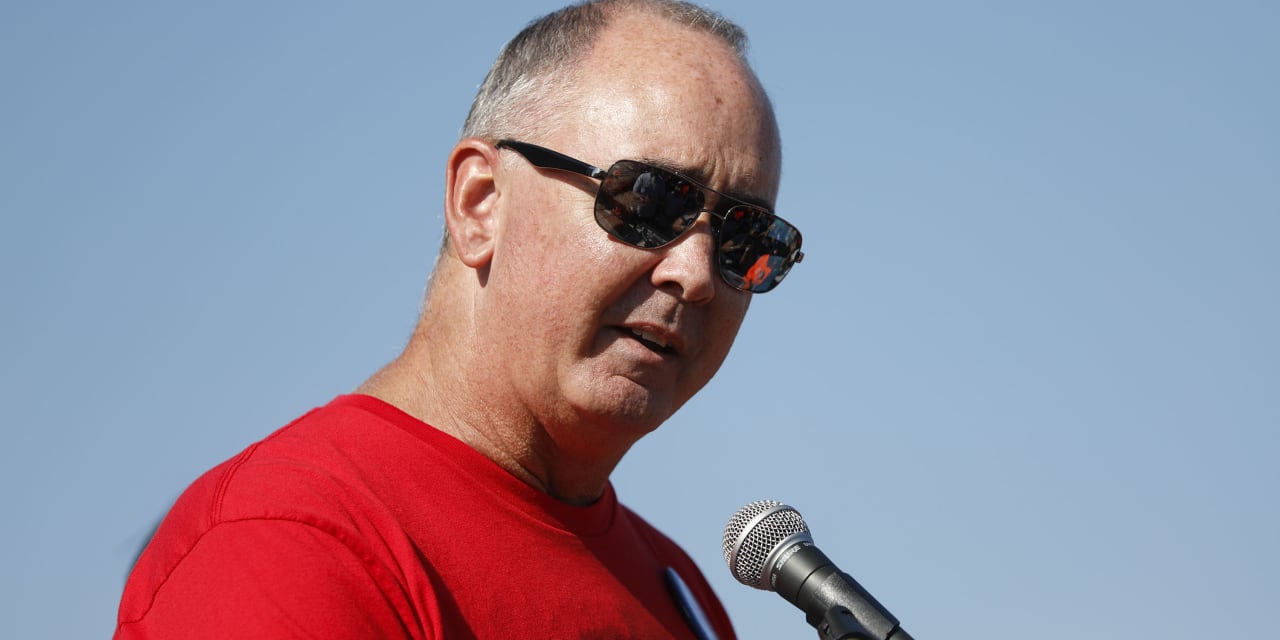

The head of the United Auto Workers on Wednesday evening said the union and the Big Three automakers are still “very far apart” on the union’s key priorities for wage increases—and that the union is preparing to strike all three companies using new tactics after 11:59 p.m. on Thursday.
“We’re likely going to have to take action,” said Shawn Fain, the union’s president of five months, on a
Facebook
livestream.
The union won’t strike all facilities at once, Fain said. He is calling the new tactic a “stand-up” strike, in which local union chapters will be asked to strike at individual auto plants. Fain said it would create confusion for the companies and give the UAW added leverage at the bargaining table.
“The plan is for the locals that are called to go on strike to do so, and the other locals to keep working,” he told union members on his livestream. “Don’t stop working unless you are explicitly called to strike.”
The approach represents a departure from past negotiations, when the union would sign a contract with one of the Big Three first and leverage it to get similar deals with the other two companies.
The UAW has never initiated strike activity against all three of the auto makers at once. “We will strike all three companies—a historic first—initially at a limited number of targeted locations that we will be announcing,” Fain said.
Contracts for the UAW’s roughly 150,000 members expire midnight Thursday with
Ford Motor,
Stellantis
and
General Motors.
The union has demanded a 40% wage increase, spread out over the next four-year contract, along with cost-of-living-adjustments, job security measures, and retiree benefits.
“Altogether we are seeing movement from the companies,” Fain said. “But they’re still not willing to agree on the kinds of raise that will make up for inflation on top of decades of falling wages. And their proposals don’t reflect the massive profits that we’ve generated for these companies.”
Fain held out the possibility of massive strike action, beyond targeted locations. “An all-out strike is still a possibility,” he said. “We’re keeping all of our options open.”
If things get that far, a total strike by UAW members could cost the U.S. economy about $500 million a day, according to estimates from Joe Brusuelas, RSM’s chief economist. That’s a big sum, but not enough to bring on a recession, Brusuelas wrote this week.
Labor strikes are often averted at the last moment, but Fain’s unusually aggressive stance adds new urgency to this year’s talks. In 2019, a GM strike lasted for 40 days and cost the company an estimated $3.6 billion.
Write to Catherine Dunn at [email protected]
Read the full article here